Making Climate Solutions Work: Reflections from COP31
“The future of the world is in Türkiye!” promises an advertising poster in Antalya, a slogan that somehow seems to have found its way into many of the conversations I have had with residents over the past days. But whose world and whose future are we actually talking about? With COP31 still underway, this question has accompanied many of my observations at the conference, particularly regarding whose knowledge counts in international climate politics, how problems are defined, and what it actually takes to make proposed solutions work.

One could certainly argue that international conferences such as COP bring together an impressive number of people, organisations, ideas and visions of the future. And yet, as the past days have once again shown, access to these arenas of knowledge production remains unequally distributed. Indigenous Peoples and local communities continue to struggle for meaningful participation in decisions that affect their territories. Beyond these voices, there are also many deeply committed people from NGOs and sustainability driven companies, some of whom cover the considerable costs of attending out of their own pockets. Even the spatial organisation of the conference plays a role here. The distances between the Blue and Green Zones make encounters between different groups of participants particularly difficult, while the Green Zone itself feels somewhat arbitrary, somewhere between a business fair and a collection of genuinely excellent side events. But who actually gets access to the spaces in which problems are discussed, solutions negotiated and futures imagined?
These questions became particularly relevant during our side event, “Who Makes Circularity Work? Finance, Responsibility and Local Realities in the Transition to a Circular Economy”, which I organised together with Stefanie Beitien from PCX Solutions (Watch the discussion here). The fact that COP31 has introduced a stronger focus on Zero Waste is quite a novelty and an interesting opportunity to bring different perspectives on circularity into conversation.
One of the arguments I brought to the discussion, and something I have written about quite extensively, including in my book on recycling infrastructures, is that a

circular economy cannot be understood through its materials and material flows alone.
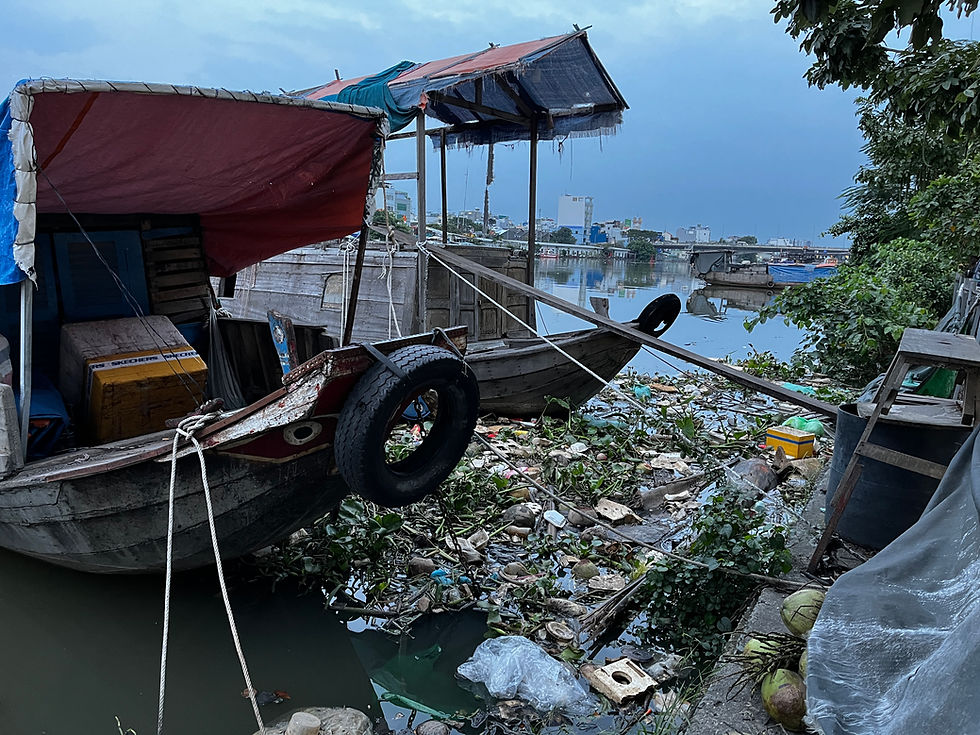
The circular economy model, as convincing and visually appealing as it might be, remains remarkably flat. It tells us a great deal about how materials are supposed to circulate, but very little about the practices that actually make this circulation possible. I argue that we need to extend this model by including multiple dimensions of practice, taking into account the everyday routines, knowledge, labour, relationships and particularly the practices of care and maintenance through which materials are collected, recovered, reused, valued or discarded. After all, someone has to make circularity work. And this raises questions that are easily overlooked when focusing primarily on material flows: Who carries the responsibility? Who does the work? Who pays for it? And whose knowledge and practices are taken into account?
These questions connect to a broader problem in international cooperation. The assumption that solutions once tested in one geographical context can be transferred to another continues to shape many interventions. Although we have learned quite a lot over the past 50 years, and policy templates, tech fixes and other interventions are increasingly adapted to local conditions, many of these solutions still struggle to have a lasting impact. I argue that part of the problem lies in a misunderstanding of what the “local” actually is. A city, a neighbourhood or a particular site is more than the sum of its physical and cultural characteristics. To advance solutions collaboratively, it is equally worth looking into the history of a site, how it has dealt with power and knowledge from “outside”, and how futures are imagined.
Interventions encounter what I call terrains of sedimented knowledge that are continuously shaped by past interventions, present practices, and speculative futures that condition how traveling expertise takes hold, becomes authoritative, or is resisted.
These terrains are porous, fragmented and difficult to classify, shaped by histories, experiences and different ways of understanding the world. This is also something I explore in my recently published article on “Sedimented Knowledge” in Environment & Society.
I think this is precisely where anthropology could contribute much more to international climate politics.
There are surprisingly few actively practising anthropologists moving in these arenas, despite the fact that our expertise goes far beyond a general understanding of local cultures. Many of us work in highly specialised fields, including those commonly understood as technical, bringing detailed knowledge of infrastructures, technologies and the practices and relations through which they operate. In decision making contexts where ChatGPT or Gemini are increasingly consulted to gain a first understanding of a particular place, years of engagement with specific sites and practices could offer valuable additional perspectives. Of course, the people living and working in these places should be the first to speak for themselves and receive much more attention in international political arenas. Anthropological expertise cannot replace their voices, but it can contribute to questioning established understandings of what counts as relevant knowledge and who gets to participate in shaping solutions.
This also requires engagement on our side. Anthropologists need to venture into arenas that might be unfamiliar to us, something we are actually particularly good at. Getting involved in public discourse, collaborating with companies, contributing to political expert committees or engaging with professionals outside our own academic circles. At the same time, international organisations need to develop a broader understanding of what anthropological research can contribute to political decision making, including in areas that are often considered primarily technical or economic.
And this brings me back to why I think it makes sense to maintain international spaces for exchange such as COP, despite their many shortcomings. There is something valuable about bringing people together across geographical distances, professional backgrounds and different understandings of the world. But meaningful collaboration requires more than dialogue and participation. It takes time, cultural sensitivity and reflexivity, as well as a genuine interest in including different lived realities in the process of shaping solutions. The challenge is therefore also to reconsider how these international arenas are organised or how collaborative work can continue beyond the conference itself. After all, climate solutions do not emerge independently of the people, practices and relations through which they eventually take shape.
Watch our COP31 side event: “Who Makes Circularity Work? Finance, Responsibility and Local Realities in the Transition to a Circular Economy”

Kommentare